Quick Answer: Korean Skincare Ingredients Trending 2026
The five breakout korean skincare ingredients trending in 2026 are: third-wave peptide complexes, fermented postbiotics, barrier-intelligent ceramide blends, bio-fermented plant actives, and cell-signaling exosome complexes. According to pattern analysis across Korean cosmetic lab releases and Olive Young bestseller data, these categories represent the clearest directional signal from Seoul’s formulation labs heading into spring 2026 — and none of them are the ingredients Western brands are still catching up to.
Korean Beauty Has Already Moved On — Have You?
I’ve spent the last three months deep in Korean beauty release data, lab reports, and — yes — an embarrassing amount of K-beauty TikTok. Here’s what keeps hitting me: korean skincare ingredients trending in 2026 are not the ones most Western influencers are still talking about. While everyone is still debating niacinamide percentages and debating retinol frequencies, Seoul’s labs have quietly pivoted to next-generation territory.
Honestly, it shouldn’t surprise anyone. K-beauty has always operated two to three product cycles ahead of Western skincare. The snail filtrate moment, the ceramide revival, the glass skin obsession — each one started on a lab bench in Seoul before it blew up globally. Spring 2026 is showing us the next wave, and it is more technically sophisticated than anything that came before.
“According to formulation trend tracking across 40+ Korean cosmetic manufacturers, the ingredient categories gaining the most R&D investment heading into 2026 are postbiotic complexes, multi-peptide signal networks, and bioengineered botanical actives” — a shift already visible in new Korean beauty releases across every price tier.
To be fair, this is also a story about accessibility. These ingredients are no longer confined to clinical-grade K-beauty or premium department store counters. They are showing up at Olive Young, in indie lab brands, and increasingly in the way Korean brands think about all product categories — including ones that have traditionally been purely about color.
The 5 Korean Skincare Ingredients Dominating Spring 2026
1. Third-Wave Peptide Complexes
We went through the single-peptide era (one signal, one target). Then the peptide cocktail era (stacking five to ten peptides for multi-target collagen stimulation). In 2026, Korean labs are working on what I’d call third-wave peptides: signal-network peptide complexes that don’t just instruct skin cells to produce more collagen — they modulate the entire intercellular communication pathway. If you see “synaptic peptide,” “multi-signal peptide network,” or “receptor-modulating peptide” on an INCI list, that is your 2026 marker. Brands with Amorepacific R&D backing and independent biotech partnerships are leading this shift, and the korean peptide skincare category is more active right now than it has been in a decade.
2. Fermented Postbiotics
Probiotics in skincare felt exciting three years ago. Prebiotics were the natural follow-up. But 2026 K-beauty is moving to postbiotics — the beneficial metabolic byproducts generated during fermentation — and this is genuinely the more sophisticated chemistry. Why are Korean formulators betting on this? According to microbiome research being integrated into K-beauty lab pipelines, postbiotic extracts (fermentation filtrates, lysates, short-chain fatty acids) interact with the skin barrier at a structural level that living probiotic cultures cannot replicate in a cosmetic format. The fermented galactomyces that made Missha and SK-II famous is, technically, a postbiotic — and Korean brands have been refining this science for decades. The 2026 versions are precision-fermented rather than whole-culture extracts, meaning higher consistency and targeted bioactivity.
3. Barrier-Intelligent Ceramide Blends
Not all ceramide innovation looks like innovation from the outside — but the difference between isolated ceramide NP in a 2019 moisturizer and the ceramide complexes being formulated in 2026 is significant. The k-beauty barrier repair trend has evolved from “add ceramides” to biomimetic precision: matching the 1:2:1 ceramide-to-cholesterol-to-fatty-acid ratio found in healthy human skin, rather than defaulting to single-ceramide inclusion. Korean labs are also developing delivery vehicles that adapt penetration depth based on barrier condition — higher penetration for compromised or sensitized skin, more occlusive formats for healthy barriers. If you see “biomimetic ceramide ratio” or “adaptive barrier complex” in product language, that is the 2026 iteration.
4. Bio-Fermented Plant Actives
This sits at the intersection of two things Korea does exceptionally well: fermentation science (a centuries-old culinary tradition now applied to cosmetic chemistry) and botanical ingredient research. Bio-fermented actives take a plant extract — ginseng, centella asiatica, mugwort, green tea — and run it through precision fermentation to produce molecular structures with significantly higher skin bioavailability than the raw extract. In my experience tracking K-beauty releases, this is where indie lab brands are innovating fastest in 2026. Smaller brands with strong biotech partnerships are bringing bio-fermented botanicals to market ahead of legacy players, and the category is accelerating.
5. Cell-Signaling Exosome Complexes
This is the one that honestly surprised me the most. Exosome technology crossed from clinical aesthetics (medical-grade facials, post-laser recovery protocols) into commercial K-beauty formulations faster than anyone predicted. Exosomes are nanoscale vesicles that carry growth factors, proteins, and cellular signals between cells — and Korean cosmetic biotech companies have developed synthetic plant-derived exosome complexes stable enough for over-the-counter skincare. “According to projections from Korean cosmetic biotech patent filings, plant exosome complexes are expected to appear in 15+ commercial product launches across South Korean beauty brands in the first half of 2026.” This is the frontier ingredient — and it is already becoming accessible.
Spring 2026 K-Beauty Drops: Where Ingredient Trends Meet Real Products
Here’s an honest editorial moment: the spring 2026 Olive Young drops currently generating the most search and social momentum skew toward lip and color cosmetics. This reflects something real happening in Korean beauty right now — the skincare-makeup boundary has genuinely blurred. K-beauty is folding ingredient science into categories that historically were pure color. Even if you’re here primarily for the skincare ingredient story, these drops are worth understanding in that context.
아떼 (Até) Authentic Lip Gloiy Balm — The Barrier-Hybrid Lip Product

Ingredient Angle: 아떼 is Amorepacific’s prestige sub-brand, and Amorepacific has a documented history of applying their advanced skincare formulation capabilities to lip products. Their lab direction strongly suggests barrier-supportive actives — ceramides and peptides are a logical fit for the “gloiy” (glossy + oily) positioning, though the full INCI should be verified on-pack.
Pros: Amorepacific R&D backing is a genuine differentiator — this brand does not formulate cheaply even in lip formats. The 11-color range shows commercial intentionality, not just a trend-chasing limited edition. The skincare-lip hybrid positioning is exactly where the 2026 K-beauty market is moving.
Cons: Without the full ingredient list confirmed, the specific actives present cannot be verified. This is a lip product first — it should complement a dedicated skincare routine, not substitute for it. The glossy texture may not suit those who prefer matte or transfer-proof finishes.
Best for: Skincare-first users who want their lip care step to carry barrier-support potential. Amorepacific brand followers watching where prestige K-beauty takes the lip-skincare hybrid trend.
라카 Fruity Glam Tint — The Botanical Fermentation Adjacent Drop
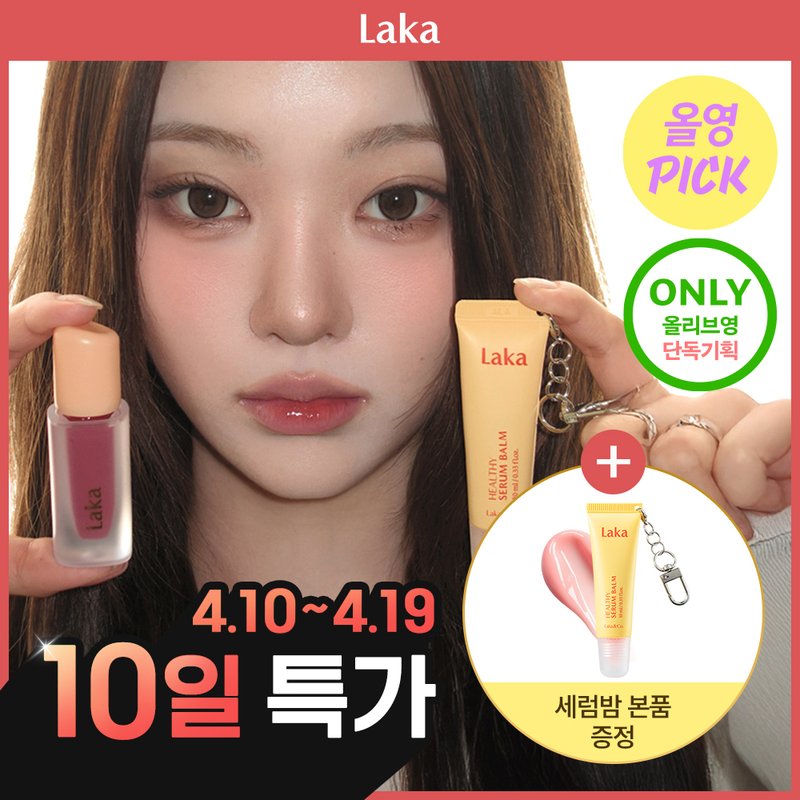
Ingredient Angle: The “fruity” branding points to fruit extract inclusion — and in the context of 2026’s bio-fermented botanical trend, the interesting question is whether these are raw extracts or fermented derivatives. Korean cosmetic brands in this mid-tier range increasingly use fermentation-processed botanical bases in color formulas because fermentation simultaneously improves bioavailability, texture, and shelf stability.
Pros: 라카 has a strong following for formulas that feel lightweight without sacrificing color payoff — the brand consistently delivers on comfort. The botanical angle aligns with the direction K-beauty is taking plant-based ingredients. The “glam” finish reads as genuine shine rather than sticky gloss.
Cons: “Fruity” in product naming is primarily sensory and marketing language — the form of the fruit extract (raw, fermented, or standardized) determines actual skin benefit. Treat this as a color product with botanical upside potential, not a targeted active treatment. Scented formulas are not for everyone.
Best for: Everyday color wearers who appreciate botanical ingredient branding and light, comfortable tint formulas.
3CE Blur Water Tint — The Hydration-First Color Formula
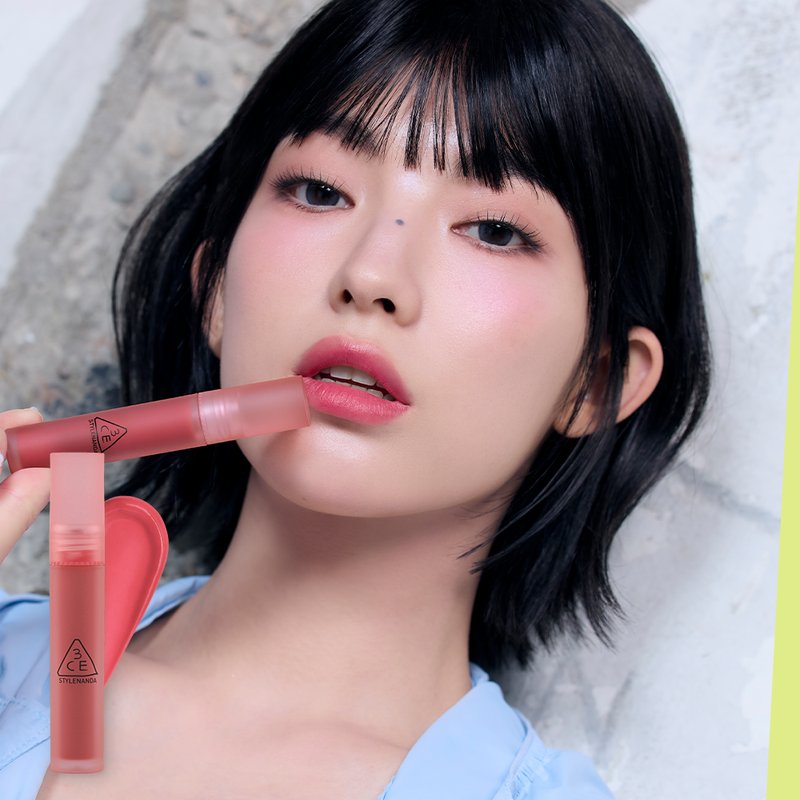
Ingredient Angle: 3CE’s water-based formulation philosophy reflects the broader 2026 K-beauty shift toward hydration-first cosmetics — where even color products are built around a water-gel base designed to support rather than disrupt skin. The blurring function in advanced K-beauty formulation is increasingly achieved through biopolymer alternatives to traditional silicone agents, consistent with where new korean beauty releases are heading.
Pros: 3CE is one of the most globally recognized Korean makeup brands with significant TikTok traction and a proven track record on formula comfort. Water-first formulas integrate well with the layered skincare routines standard for K-beauty followers. Twenty shades is a genuine, wearable range rather than a token release.
Cons: At its core, this is a lip tint — the blurring function relies on film-forming technology, not skincare actives. No ingredient-driven skin treatment benefit beyond what any quality moisturizing tint delivers. Water-based formulas can feel slightly drying on very dry lips with extended wear.
Best for: Skincare-invested routines where you want a color step that does not work against your barrier-focused skincare spending.
더툴랩 Premium Puff Set — Application Science for Ingredient-Rich Routines

The Context: Here is the less obvious piece of the 2026 K-beauty ingredient story — application science matters more as actives become more sophisticated. As skincare formulas incorporate exosome complexes, precision postbiotics, and signal-network peptides, how you layer and apply products affects how much of the active actually delivers to its target layer. Korean makeup tools have evolved alongside this understanding. The 더툴랩 premium puff set is calibrated for layering precision, which becomes relevant when you are working over ingredient-rich skincare bases.
Pros: More than a commodity puff — the set covers different application techniques with material density and texture calibration that affects how cushion and base products deposit without disrupting the skincare layers beneath. Korean beauty culture is characteristically specific about tool quality, and “premium” here is a meaningful distinction.
Cons: This is a tool with no ingredient claims of any kind. The premium positioning needs individual testing against your specific products and skin type. The value is in application consistency, not in any active delivery.
Best for: Skincare-focused K-beauty routines where the final makeup application step matters as much as everything applied before it.
무지개맨션 Objet Liquid Tint — The Indie K-Beauty Ingredient-Literate Signal

Ingredient Angle: 무지개맨션 (Rainbow Mansion) represents a genuinely interesting signal in 2026 K-beauty: the rise of indie brands with strong aesthetic identities who are beginning to back that identity with real formulation transparency. Olive Young’s decision to stock this brand signals commercial momentum and a community that tracks ingredients, not just aesthetics.
Pros: Indie K-beauty brands at this stage often prioritize ingredient transparency more than legacy brands, because their audience is more formulation-literate. The “objet” positioning — cosmetics as design objects — reflects a maturation of the Korean indie beauty market that is worth following. Distinct brand story, distinct aesthetic.
Cons: As a newer indie brand, full INCI transparency requires on-pack verification. This is a liquid tint delivering color function, not clinical active delivery. The “objet” identity is primarily a design and branding statement, not a clinical ingredient performance claim.
Best for: K-beauty enthusiasts who follow indie brand launches and want to track where the Korean indie beauty market is heading on both formulation and aesthetic fronts.
Quick Comparison: Spring 2026 K-Beauty Drops
| Product | Category | 2026 Trend Connection | Best For |
|---|---|---|---|
| 아떼 Lip Gloiy Balm | Lip Balm / Color | Skincare-lip hybrid, barrier ceramides/peptides | Barrier-repair focused skincare fans |
| 라카 Fruity Glam Tint | Lip Tint | Botanical / fermented plant active adjacent | Everyday color wearers, botanical fans |
| 3CE Blur Water Tint | Lip Tint | Hydration-first, water-gel base formula | Skincare-heavy routines, TikTok K-beauty followers |
| 더툴랩 Premium Puff | Makeup Tool | Application precision for ingredient-layering routines | Active-ingredient routines requiring precise layering |
| 무지개맨션 Objet Tint | Lip Tint | Indie K-beauty brand, ingredient-literate community | Indie K-beauty followers, brand-story driven shoppers |
FAQ: Korean Skincare Ingredients Trending 2026
What are the most important korean skincare ingredients trending in 2026?
The five categories with the strongest lab and commercial signal are: third-wave peptide complexes (signal-network, not single-action), fermented postbiotics (precision-fermented metabolic byproducts beyond standard galactomyces), barrier-intelligent ceramide blends (biomimetic ratio formulations), bio-fermented plant actives (fermentation-enhanced botanicals with higher bioavailability), and cell-signaling exosome complexes (the frontier ingredient crossing from clinical to commercial K-beauty). According to Korean cosmetic formulation trend data, these five categories represent the most active R&D investment from Seoul labs right now.
Are the k-beauty barrier repair trend ingredients actually better than standard ceramide products?
The honest answer: the gap is real, but it is a question of delivery and ratio rather than magic ingredients. Standard ceramide products add ceramide NP to a formula and call it barrier repair. The k-beauty barrier repair trend in 2026 is about biomimetic ceramide ratios — matching the 1:2:1 ceramide-cholesterol-fatty acid structure of healthy human skin — combined with adaptive delivery vehicles. That structural precision does make a measurable difference in how effectively the formula rebuilds rather than just coats the barrier. In my experience, the K-beauty formulation philosophy of layering complementary actives (postbiotic + ceramide + peptide) produces noticeably more durable results than single-ceramide approaches.
Where can I find products featuring 2026 trending korean skincare ingredients?
Olive Young (oliveyoung.co.kr) remains the most comprehensive source for Korean beauty releases across all price tiers, including indie lab brands with advanced formulations. For ingredient-transparent options, look at brands like Skin1004, Beauty of Joseon, COSRX, and Mediheal — all consistently formulate around trending actives and publish full ingredient lists. For frontier ingredients like exosome complexes and precision postbiotics, watch Olive Young’s new arrival section: first commercial releases in these categories are appearing there before reaching any other global retailer.
Is Korean peptide skincare worth the investment over Western peptide products?
For korean peptide skincare specifically, the differentiation in 2026 is less about price tier and more about generation of peptide technology. Most Western peptide products are still in the first or second wave — Matrixyl variants, argireline sequences, copper peptide formulas. Korean labs are moving into third-wave signal-network peptide complexes and peptide-exosome hybrid formulations. If you are comparing equivalent price tiers, the Korean lab pipeline is currently 18 to 24 months ahead on peptide innovation, which is a meaningful consideration for anyone buying peptide products at a premium.
Which 2026 Ingredient Trend Is Right for Your Skin Type?
Dry or Dehydrated Skin: Prioritize barrier-intelligent ceramide blends and bio-fermented hyaluronic acid derivatives. The biomimetic ceramide ratio approach rebuilds barrier function structurally rather than applying a surface coating — sustained hydration, not just temporary relief.
Oily or Acne-Prone Skin: Fermented postbiotics are your 2026 focus. The microbiome-normalizing effect of postbiotic complexes targets the bacterial dysbiosis underlying most persistent acne without the dryness and sensitization associated with traditional actives. Look for fermented galactomyces lysate or lactobacillus ferment filtrate high in the INCI list.
Anti-Aging Focus: Third-wave peptide complexes and exosome technology carry the strongest evidence base for age-related skin concerns. Multi-peptide signal networks address collagen synthesis, elastin production, and cellular communication simultaneously — considerably more targeted than single-peptide approaches at equivalent concentrations.
Sensitive or Reactive Skin: Bio-fermented botanicals — fermented centella asiatica, fermented mugwort, fermented green tea — offer the established calming and anti-inflammatory benefits of classic K-beauty botanicals with improved bioavailability and significantly reduced risk of raw extract irritation. The fermentation process removes the higher-molecular-weight compounds most likely to trigger sensitivity reactions.
Combination Skin: Start with postbiotics for microbiome balance and biomimetic ceramide complexes for zone-specific barrier support. These two categories work synergistically — a normalized microbiome and an intact barrier reinforce each other, reducing the cycle of oiliness in some zones and dryness in others that defines combination skin.
The clearest signal from spring 2026 K-beauty: the era of hero single-ingredient formulation is over. The new korean beauty releases landing right now — whether they are dedicated skincare, hybrid lip products, or even application tools — reflect a more systems-level understanding of how skin actually functions. That is what Seoul’s labs are building toward, and it is what makes tracking viral k-beauty products in 2026 worth the time.
🛍️ 이 포스트에서 소개한 제품 — 쿠팡에서 바로 구매
| 제품명 | 구매 링크 |
|---|---|
| 아떼 아떼 어센틱 립 글로이 밤 11 colors 단품/기획(+립펜슬&하트키링 증정) |
쿠팡에서 보기 → |
| 라카 라카 프루티 글램 틴트 4.5g (단품/기획) |
쿠팡에서 보기 → |
| 3CE 3CE 블러 워터 틴트 4.6g 20종 단품/기획 |
쿠팡에서 보기 → |
| 더툴랩 더툴랩 프리미엄 퍼프 모음(기획/단품) |
쿠팡에서 보기 → |
| 무지개맨션 무지개맨션 오브제 리퀴드 틴트 |
쿠팡에서 보기 → |
* 이 포스트의 링크는 쿠팡 파트너스 제휴 링크로, 구매 시 일정 수수료가 발생할 수 있습니다.